The simple act of donating money, time, attention, or any action that can reflect on a person’s well-being, certainly helps transform lives. That’s why, to celebrate the “Giving Day” Law, approved by the Corumbá City Council and signed by Mayor Marcelo Iunes, social institutions operating in the Pantanal region joined together and held a march on Friday (11).
The mobilization, which went along Rua Frei Marino and ended at Avenida General Rondon, aimed to draw society’s attention, showing that giving can and, with full conviction, help save and change the reality of many people, such as children and teenagers assisted by Instituto Moinho Cultural, Cripam (Casa de Recuperação Infantil Padre Antonio Müller), Instituto Novo Olhar, and Cidade Dom Bosco.
Anderson Gallo/Diário Corumbaense
Alice Aquino said the goal is to draw everyone’s attention, especially business owners
Alice Aquino, public relations officer at Moinho, said the march drew everyone’s attention, especially business owners, to help the institutions survive. According to her, over its 18 years of existence, Moinho has assisted more than 23 thousand children and teenagers and also 80 thousand family members involved in the institution’s activities.
“The donation campaign came to Brazil in 2013, precisely to promote a more caring country. That’s its purpose, and the institutions that survive on donations joined this cause. With that in mind, we decided to mobilize society, especially drawing the attention of business owners, so that they see that each donation truly changes the lives of children and teenagers in situations of vulnerability within the municipality. And here, we have the border region, which is an extra distinguishing factor, since Moinho also serves Bolivians through its activities,” said Alice.
Meanwhile, Dilson Esquer, pedagogical coordinator at Cripam, one of the city’s institutions that most relies on donations, said the event aims to awaken the population’s sensitivity, showing that besides donating, “giving of yourself” physically is also a way to help with the activities.
Anderson Gallo/Diário Corumbaense
Dilson Esquer, pedagogical coordinator at Cripam
“Cripam, since 2017, has taken part in Giving Day, and has been in this battle to promote this culture, so much so that one of this year’s victories was the law signed in early November. This means that both the Executive and Legislative branches also understand and support this movement. Our idea is to carry out awareness actions and then have this return of donations within the municipality, because these donations we receive help keep a child’s dream alive. No institution is rich on its own, so we need donations. But besides donating financially, there is another movement toward a broader view of giving beyond the monetary. There is also giving time, engagement through social media, sharing information, giving generosity and prayer, so this helps a great deal,” emphasized Dilson to Diário Corumbaense, noting that Cripam currently serves 600 children.
The founder of Instituto Novo Olhar, Edinaldo Souza Neves, said the organization currently has 98 children and teenagers enrolled in after-school programs. “We need to be aware that giving is helping, is transforming; that, for certain, is what makes it all worthwhile,” he said.
Anderson Gallo/Diário Corumbaense
The mobilization brought together members of organizations that operate in the city and rely on donations to survive
For the coordinator of Cidade Dom Bosco, Fernando Henrique Melgar, the institution has followed this culture of giving since its founding by Padre Ernesto Sassida in 1961, resulting in the educational process and social work maintained to this day.
“The culture of giving was essential for us to build ourselves and become what we are today. It is important for organizations, because it strengthens the possibilities for those they serve, so they can develop alongside the organizations in their fields of work. This unity is important to make Corumbá’s society and businesses understand how important it is to give and to provide this protection and development to children and young people,” said Melgar.
Giving transforms and helps development
Many people have already gone through an institution in Corumbá and now work in the job market, carrying forward the learning they gained over the years they took part in activities within the institution they belonged to. This struggle does not stop, and as some leave, others arrive to fill those spaces and help make a difference.
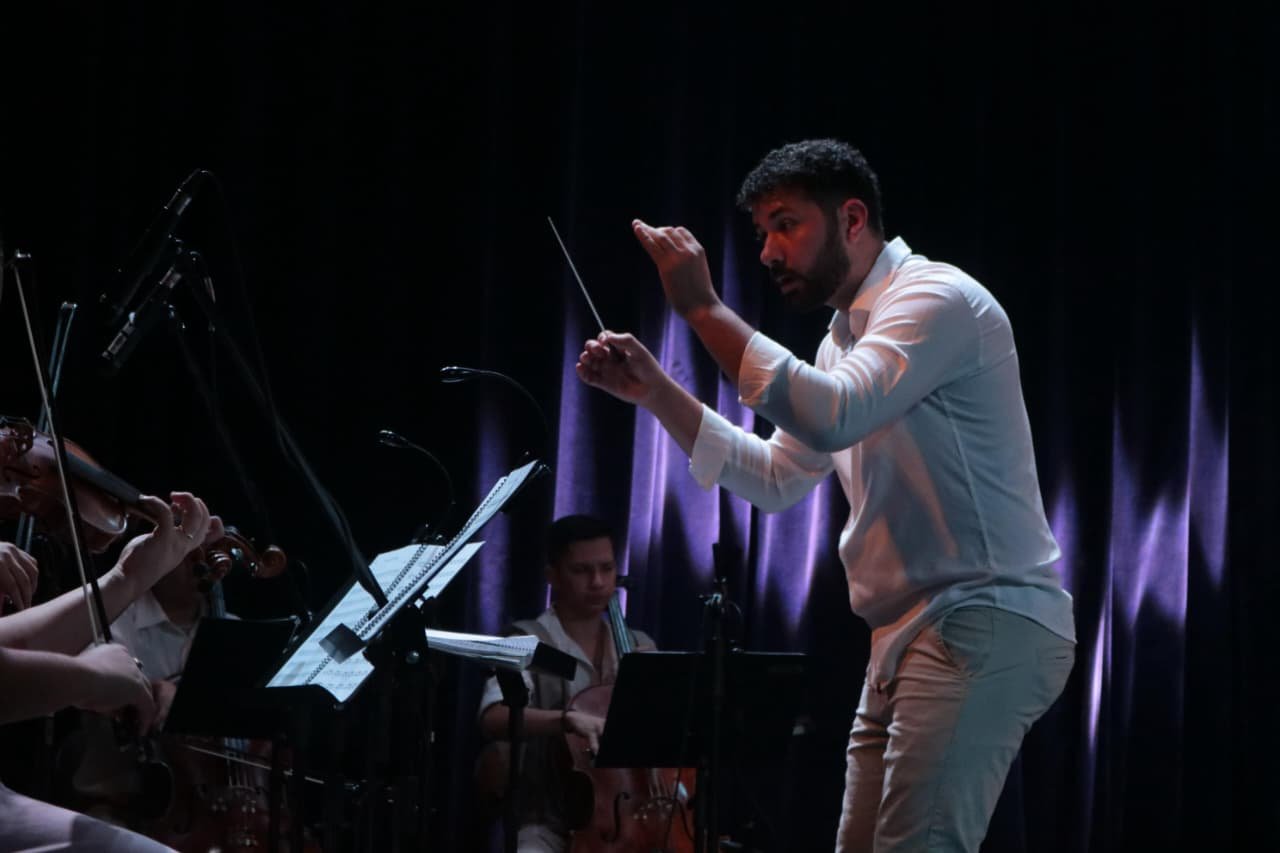
An example of this is Luana Barbosa, who is part of Moinho Cultural. It was within the institution that she learned to play the cello and many other things that will serve as a foundation in her professional and personal life.
Anderson Gallo/Diário Corumbaense
Luana Barbosa is a student at Moinho Cultural
“That’s why it’s important to help, to donate, because whoever takes this action helps transform. The more donations, the greater the chance the institution has to open more space for those who want to add value and be there learning. This help is very important so that we can always keep our doors open,” said Luana, who has been at Moinho for five years.
Kamilly Coelho, 15, has been at Cripam for seven years. “It’s important to always be teaching that we must collaborate and help people, because when we do this, it directly reflects on whoever is helped, as happens at Cripam, which survives largely on donations, and if that didn’t happen, I probably wouldn’t be there, like many of my classmates,” mentioned Kamilly, who takes dance classes and plays in the institution’s marching band.
How to take part this year-end
To take part in the campaign, all you need to do is purchase the ‘Giving Day Cake,’ with a symbolic gesture of R$40.00. Orders can be made by phone at (67) 98471-7030 and (67) 98484-7971
The proceeds will help Cripam and partner institutions turn a gesture of solidarity into a Christmas kit with farofa, soda, chicken, and panettone for 300 families in situations of social vulnerability served by the institution.
How it came about
Giving Day is a mobilization that promotes a more caring country by connecting people with causes. In Brazil, Giving Day was held for the first time in 2013, a year after its first edition in the United States in 2012. Since 2014, Brazil has been part of the global movement, which today officially includes 85 participating countries.
According to the text of the law signed by Mayor Marcelo Iunes on November 1st, “Giving Day” will be celebrated annually on the Tuesday following the national Thanksgiving Day.
The activities for the date aim to promote a culture of giving for philanthropic purposes in the municipality and to mobilize individuals, companies, institutions, and government toward a more generous, volunteering, and caring city, especially for nonprofit civil society organizations.