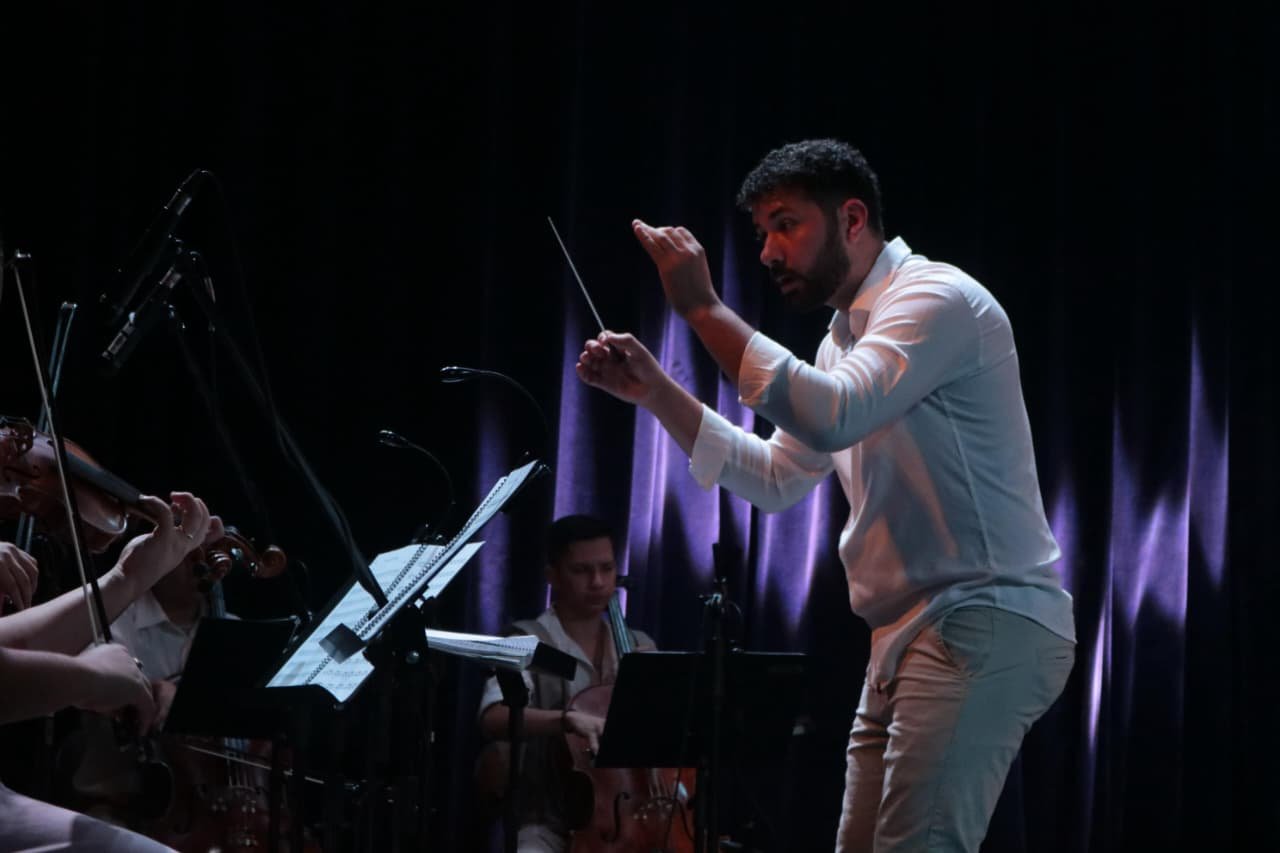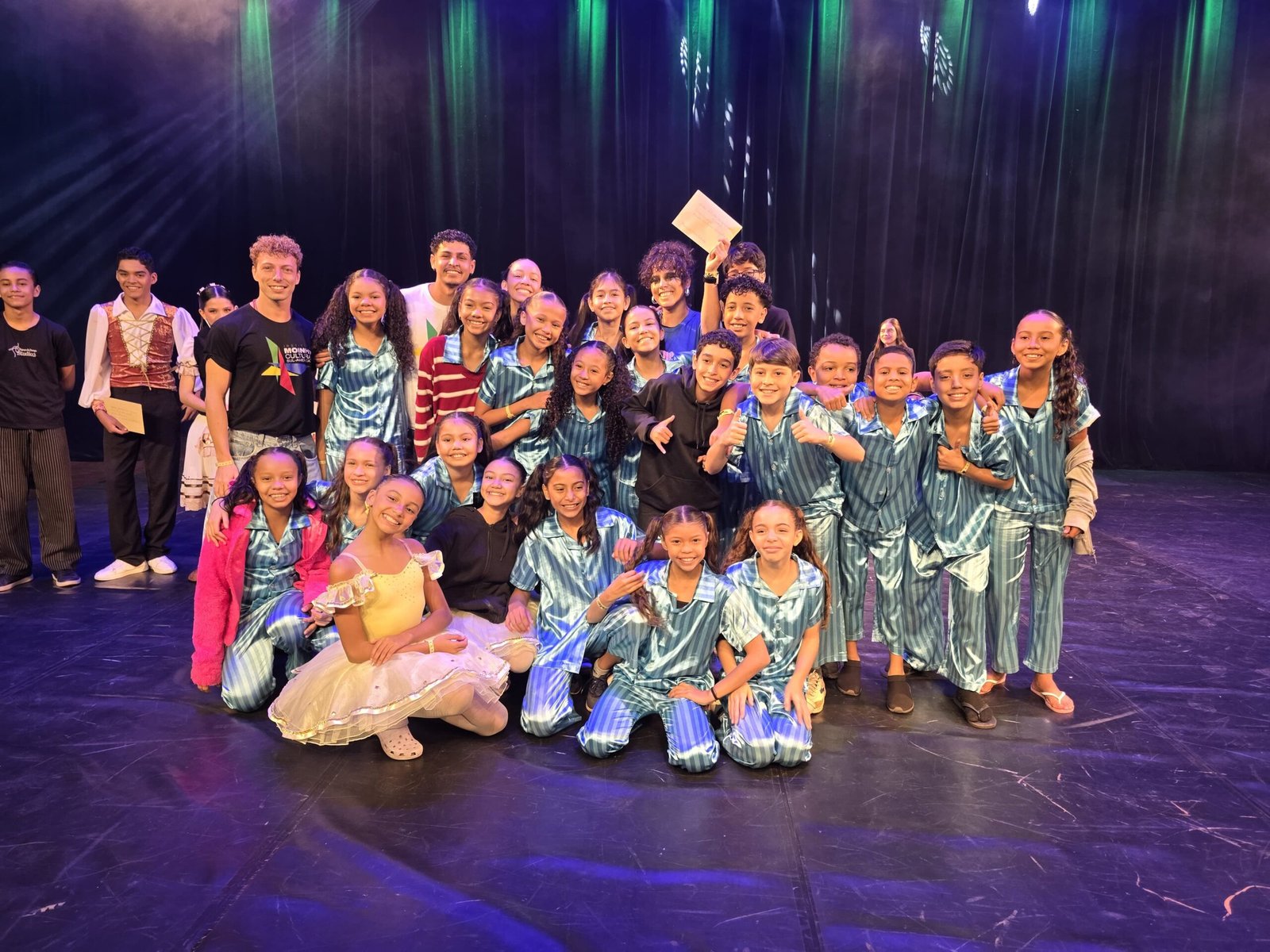
Between May 7 and 13, the show Música Poética (Poetic Music) takes over the three main cities of Mato Grosso do Sul, celebrating the state’s cultural identity through an artistic fusion of dance, music and poetry. With free performances, the project brings together on stage two great names of regional music, Geraldo Espíndola and Márcio De Camillo, alongside the Orquestra de Câmara do Pantanal (Pantanal Chamber Orchestra) and the Cia de Dança do Pantanal (Pantanal Dance Company), in a sensitive and vibrant journey through the roots of the Pantanal.
Conceived by the Instituto Moinho Cultural Sul-Americano, the project was awarded funding through the Lei Paulo Gustavo and presents a repertoire ranging from celebrated songs such as “Me Deixar Levar,” “Quiquio,” “É Necessário” and “Vida Cigana” to the new song “A Terra e uma Canção,” composed by Márcio De Camillo and Geraldo Espíndola especially for the show. On stage, the compositions weave together the trajectory of two artists who translate the soul of MS into sounds and words, while the choreography of the Cia de Dança do Pantanal transforms the stage into a landscape exploring gesture, the body and the feeling of belonging to the Pantanal land.
Música Poética was born from a poem and, according to Márcio De Camillo, the name of the show already existed even before the melody. “First came the word, then the music,” the artist tells this report. During the composition process, he shared each verse with the poet and writer from Mato Grosso do Sul, Márcia Rolon, whom he calls the “godmother of the song.” “When we finished the music and recorded it, the first person I sent it to was Márcia,” he recalls.
The idea of joining forces with Geraldo Espíndola and the Instituto Moinho Cultural came next, further strengthening the concept of a collective show, sensitive and deeply rooted in the culture of Mato Grosso do Sul. Another essential name in the creative process was visual artist and photographer Helton Pérez (Vaca Azul), responsible for the cover art and the direction of the music video for the new song A Terra e uma Canção.
Márcio De Camillo describes, to Jornal O Estado, the opportunity to share the stage with Geraldo Espíndola, whom he considers a master, as an indescribable emotion, in a union of voices and generations that expresses love for nature and the urgency of preserving it.
“My history with Geraldo began with my first CD (Olhos d’Água) in 1995, when I recorded the song ‘Vida Cigana.’ The song ended up on the radio, especially in the countryside of São Paulo, and it was something very important for my early work. That’s where a wonderful connection between us was born,” the artist recalls.
For a long time, Márcio De Camillo had held the desire to compose a song in partnership with Geraldo Espíndola. The opportunity arose while he was writing a poem inspired by the poetic art of décimas, still without a defined title. Upon finishing the text, he decided to send it to Geraldo, asking if he would set the words to melody. The answer was immediate and positive, and from there the two began building the new song that is part of the show.
“It carries a very important message: caring for nature and preserving our Pantanal. I believe this cause is in total harmony not only with Geraldo’s thinking, but also with mine,” says Márcio.
For Geraldo Espíndola, the show also represents a powerful meeting between talents from Mato Grosso do Sul. “This is a show that brings together three of the most beautiful things we have to show in Corumbá and the Pantanal: the art of Moinho Cultural through dance and the orchestra, formed by talents who were born and raised at Moinho itself, and I am a witness to that. It also unites my work with that of the great composer and musician Márcio De Camillo, in a very special artistic encounter. It’s a moving and vibrant show that, in my opinion, deserves to be seen by the whole world,” he declares.
Despite belonging to different generations of music from Mato Grosso do Sul, Márcio De Camillo believes art has no age. For him, there is a deep admiration for Geraldo Espíndola’s work, especially the way the composer builds his songs, thinks about melody and crafts lyrics.
“For me, it was an incredible opportunity to compose our first song, and I believe this first composition carries a lot of each of our personalities. It was one of the most important moments of my life, I can say for certain!” he highlights.
Fine Arts
The participation of the Orquestra de Câmara and the Companhia de Dança do Pantanal is pointed out by Márcio De Camillo as one of the most striking elements of the show Música Poética, further elevating the strength of the project by integrating different artistic expressions into a single performance. For the artist, the show was created as a living celebration of the culture of Mato Grosso do Sul, of his home land, and of the art that moves everyone involved.
“I love multiple languages. I always dreamed of being a dancer, of understanding the art of the body because the body speaks. Seeing Moinho Cultural train artists with so many possibilities is inspiring. I always say I wish I had studied there. Sharing the stage with so many talents is a special moment, a true communion.”
De Camillo also reinforces the importance of public incentives so that initiatives like this can happen. According to him, Brazil still does not fully know the richness of its own culture, but this lack of awareness, on the other hand, reveals the creative power that arises daily. For the artist, it is essential to keep encouraging new creators across various languages, and to give thanks for the cultural spaces already achieved through public policies at the federal, state and municipal levels.
“The Orquestra de Câmara do Pantanal, with exquisite arrangements by Eduardo Martinelli and Rodrigo Faleiros, is led with mastery by an attentive conductor, Maestro José, who harmonizes the talent and concentration of these young musicians. The audience will certainly be moved not only by the instrumental richness, but also by the poetry in motion,” he concludes.