With a partnership with UERJ, for the first time a complete presentation of the Instituto Moinho Cultural Sul-Americano (Moinho Cultural South American Institute), with Orquestra and Cia together, goes outside MS.
Thu, June 15, 2023 | Source: Karine Dias/Press Office
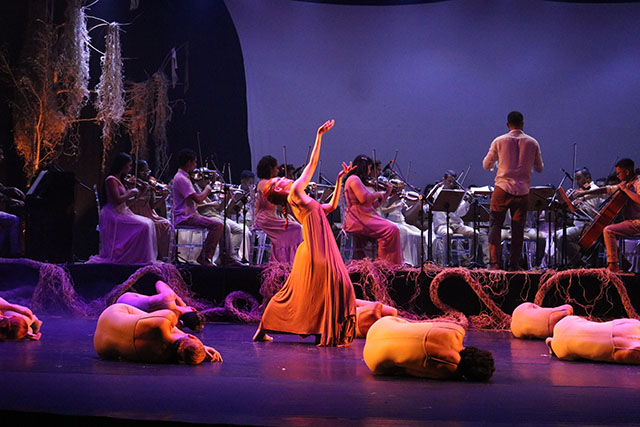
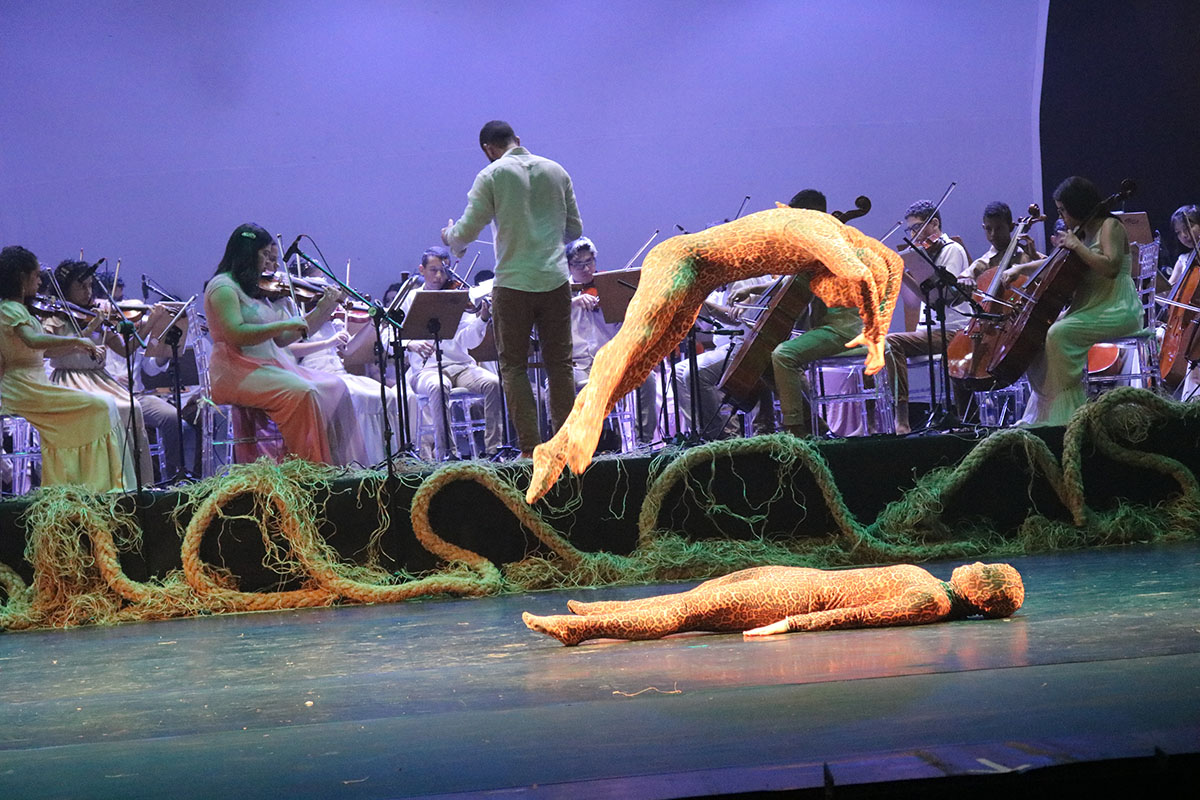
The Cia de Dança do Pantanal (Pantanal Dance Company) and the OCAMP (Orquestra de Câmara do Pantanal, Pantanal Chamber Orchestra) land in Rio de Janeiro to present Guadakan, created and presented by the Instituto Moinho Cultural Sul-Americano. There will be two performances, on June 22, at 3pm and 7pm, at the Teatro Odylo Costa, filho – UERJ Maracanã. Tickets are free and are already available on the DIVISÃO DE TEATRO DA UERJ – Produtor – Eventos e Conteúdos website on Sympla.
The 3pm session is part of the Palco das Escolas (School Stage) series, which aims to attract elementary and high school students to the Theater. After the session, there will be a conversation about the performance presented.
Rated for ages 10 and up, the public class Guadakan was presented for the first time at the Moinho In Concert event, in Corumbá, in December of last year, and was adapted for the tour format. About 4 thousand people have already watched this presentation, adding up the audiences in Corumbá, where the Moinho Cultural headquarters is located, as well as Campo Grande, Dourados and Ponta Porã, all in Mato Grosso do Sul.
“For the first time, in the public class format, initially produced for Moinho In Concert, it is presented in another state. In fact, Guadakan represents a milestone in our history. It was produced in the year we celebrate 18 years of Moinho Cultural and it is our first work that we took on tour, first within our own state and, now, we’ve brought it to Rio de Janeiro”, says the executive director of Moinho Cultural, Márcia Rolon.
Conceived from a Guató myth, the public class combines contemporary dance and orchestra. Facing the myth of Guadakan, the presentation leads everyone to a reflection:
In the beginning, there was simplicity. The elders learned and passed on to their own that everything has an owner in the Pantanal, these are non-human, supernatural or divine beings who must be respected and demand ethical conduct so that everyone there can live in balance with the resources they offer. When rules are broken, punishments will be handed down. In the present, more than 17 million vertebrate animals have been killed.
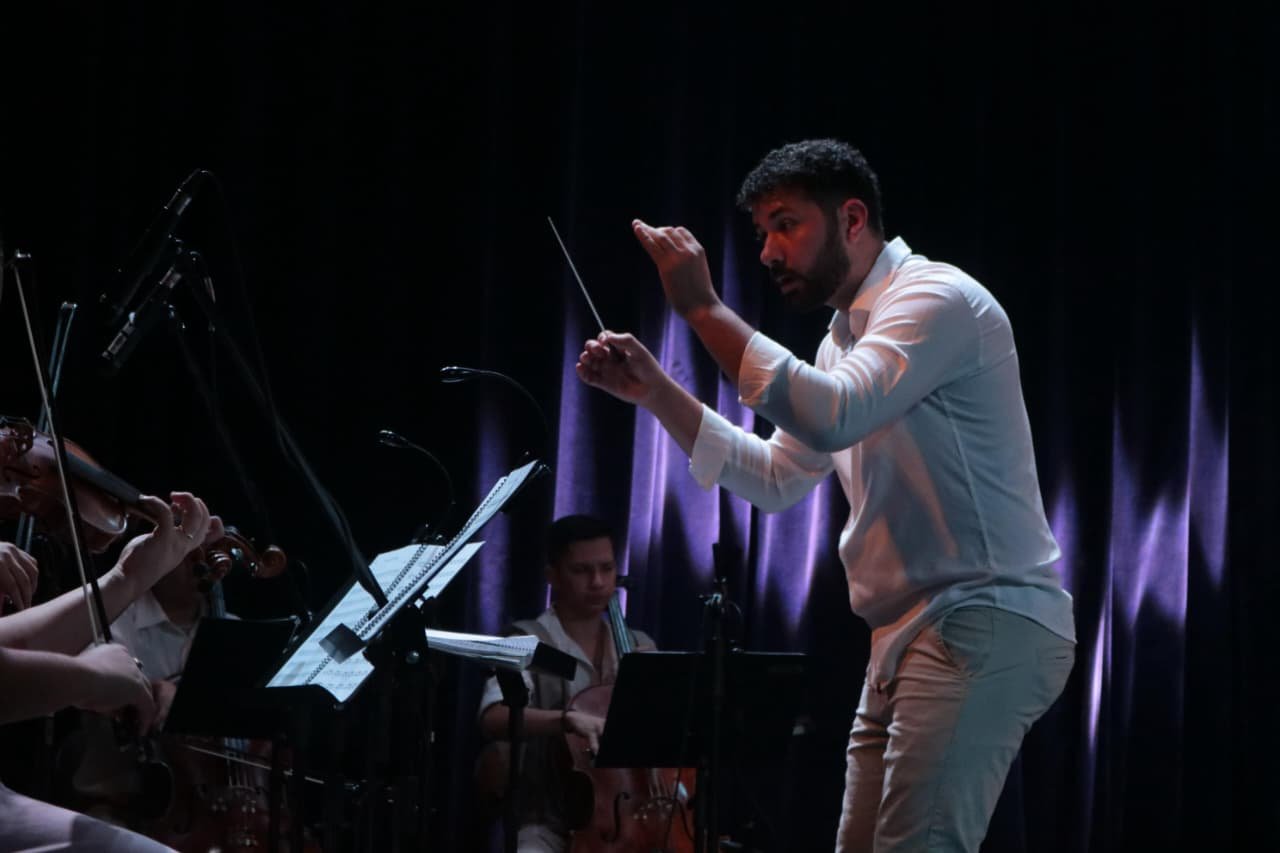
The stage concept and general direction is by Márcia Rolon, arrangements and musical adaptation by Eduardo Martinelli. The conducting is by José Maikson, the narration of the myth by Arce Correia, the choreography is by Chico Neller and the costumes by Luiz Gugliatto.
Márcia Rolon explains that Guadakan is intense and necessary. “We have experienced in this decade the largest wildfires ever recorded in the Pantanal. Brazil, now, is already preparing to host COP30. The world discusses global warming and its impacts on nations. And the Pantanal cries out for help. As Pantanal people and residents of Mato Grosso do Sul, we know the urgency of looking at what is ours and of all Brazilians. Through art and all the provocation it carries with it, we are breaking through spaces to remind everyone that the Pantanal needs us”, she points out.
Partners in this event include the Universidade do Estado do Rio de Janeiro (State University of Rio de Janeiro), through the Pró-Reitoria de Extensão e Cultura and Cultural Department of UERJ. In production: Divisão de Teatro and Laboratório de Acessibilidade Cultural. Promotion: CTE, Rádio UERJ and Rádio Roquette Pinto.
The full-scale activities of Moinho Cultural have master sponsorship via the Lei de Incentivo à Cultura (Culture Incentive Law) from Instituto Cultural Vale, as well as sponsorship from Bellalluna Participações LTDA, Energisa, BRINKS, BTG Pactual, CaraÍ Empreendimentos LTDA, HINOVE and Rodobens. It also has the cultural support of Instituto FAR, funding from the Government of the State of Mato Grosso do Sul, through the Fundação de Cultura de Mato Grosso do Sul, in addition to the partnership with J.Macêdo and Fecomércio MS-SESC.
Institutional partners include the Prefeitura de Corumbá, Prefeitura de Ladário, Prefeitura de Puerto Suárez, Prefeitura de Puerto Quijarro, Instituto Homem Pantaneiro, IFMS, UFMS, Acaia Pantanal and other individual and corporate donors.
Learn more about the Institute
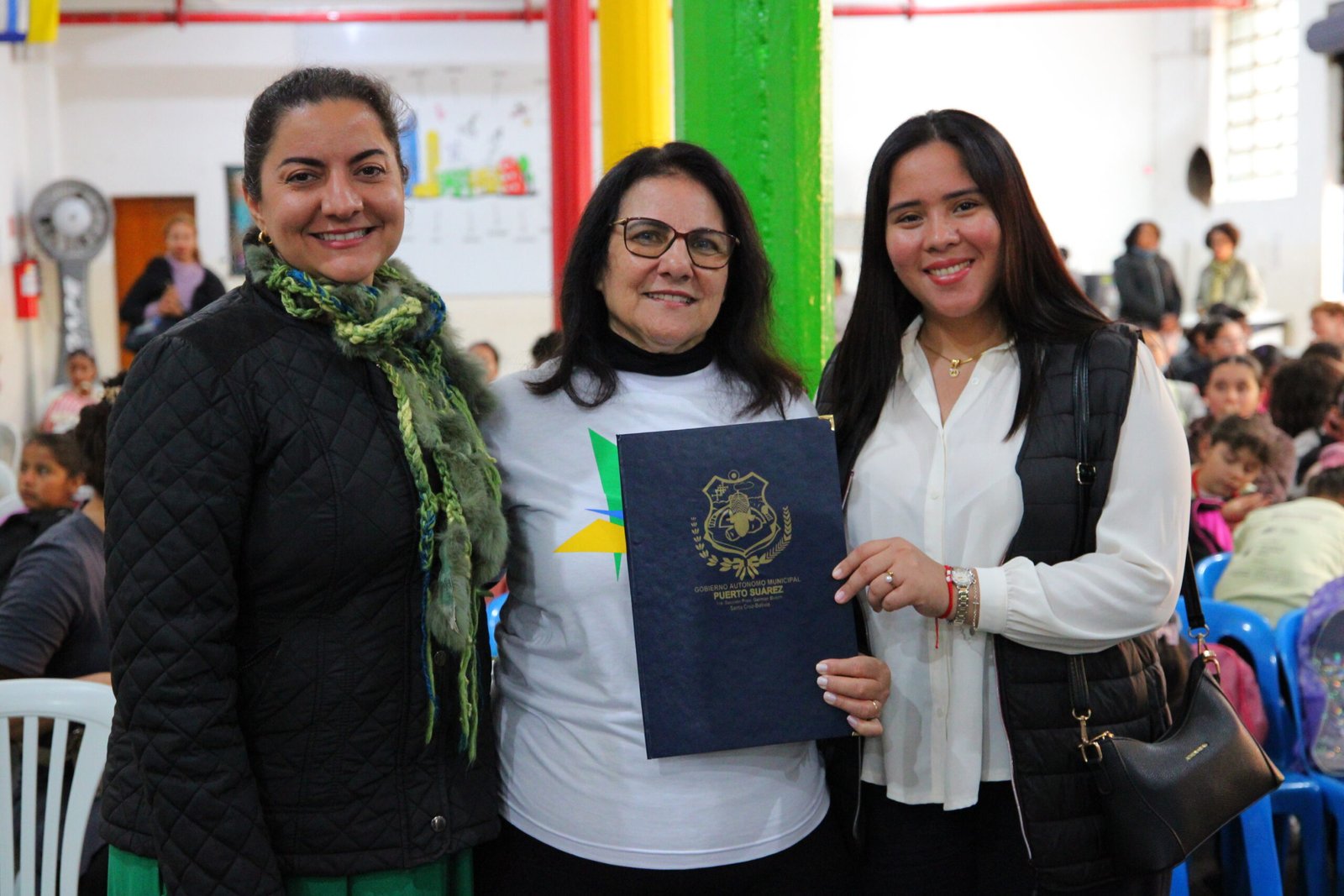
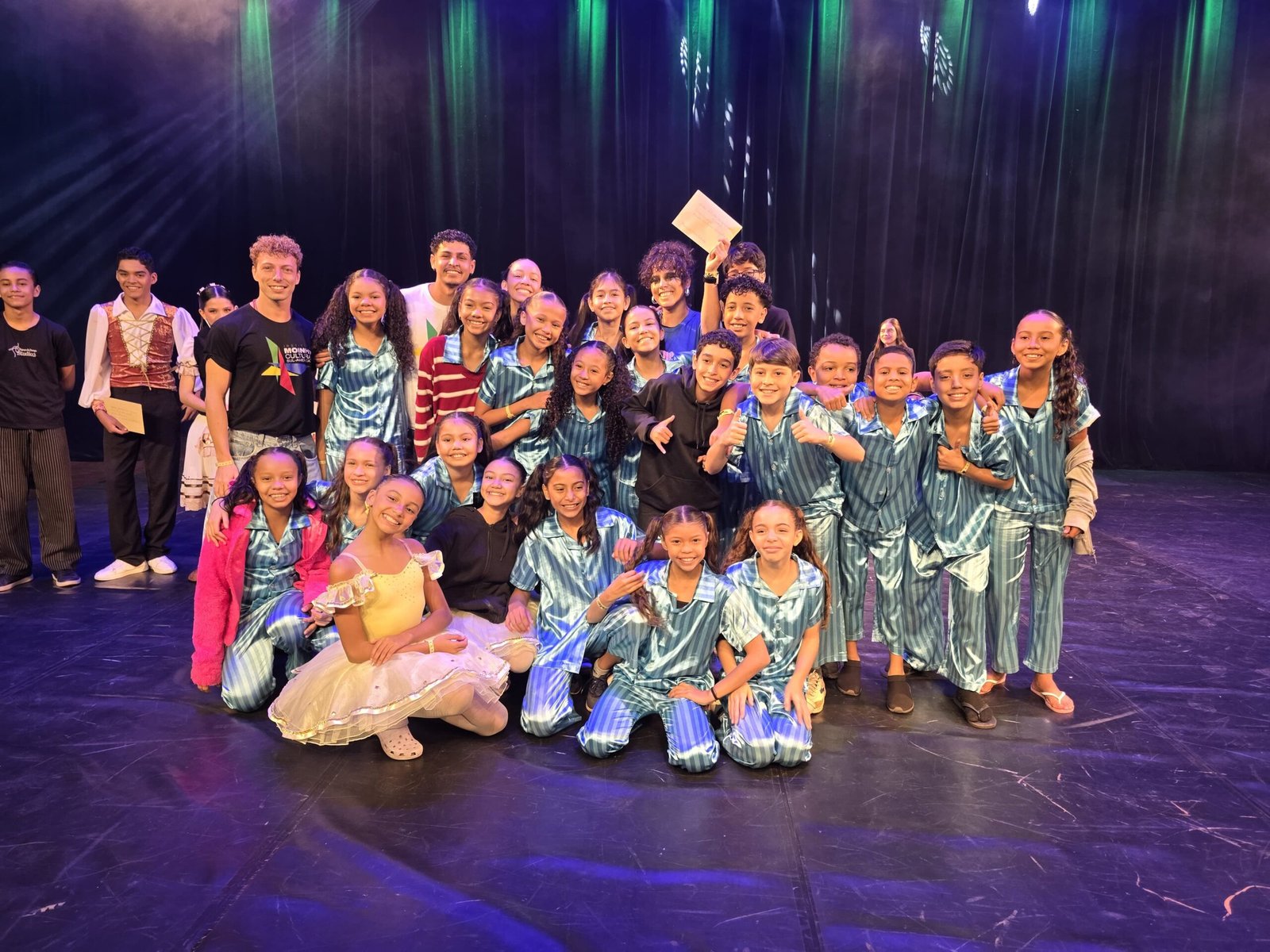
Moinho Cultural is a civil society organization that has offered, for 18 years, dance, music, technology and computer classes to children and adolescents in situations of social vulnerability in Corumbá, Ladário, Puerto Suarez and Puerto Quijarro. The continuing education offered by the institution lasts up to eight years. Moinho also works on training creative performers for young people and adults, with the Companhia de Dança do Pantanal, Orquestra de Câmara do Pantanal and Núcleo de Tecnologia (Technology Center). The institution’s mission is to reduce social vulnerability in the Brazil-Bolivia border region, through access to cultural and technological assets. Since the start of its activities, more than 23 thousand children and adolescents have already been served by Moinho.
Palco das Escolas
The Palco das Escolas project, restarted in 2009, promotes access to art and culture through the production of artistic performances by Theater Companies, Dance Companies, and Music Groups, aimed primarily at students from public schools. This is a fact that should be highlighted for its social magnitude, providing access to artistic-cultural assets to students in academic and sensitive development. The Project has an essential function within UERJ’s actions for the production, dissemination and socialization of knowledge, through which the public university establishes real bonds with the community/society, contributing to enhancing the sensitivity, sociability and expansion of the cultural dimensions of students in training. The extension activities developed, among other forms, through cultural projects driven by the production area of the Divisão de Teatro, should encourage the participation of the university community, favoring permanent mechanisms of interaction with civil society. The main goal of the projects is to transform the university into a cultural hub where artistic-cultural presentations can, increasingly, become part of the routine of the academic community, its university education, and the external community, shaping new fields for the production and dissemination of knowledge at UERJ.
Therefore, the Palco das Escolas Project works to bring students from schools (especially public ones) in the neighborhoods surrounding the university to UERJ’s cultural spaces to watch the presentations, which are offered free of charge during school hours. Its goal is to offer free access to public school students, establishing relationships both with the UERJ university context and with the community in general, helping to inform and shape an audience receptive to artistic activities.